Reviewing the ITP
Review a student's Individual Transition Plan (ITP) annually, ensuring their goals and supports remain relevant as they progress towards graduation.
Overview
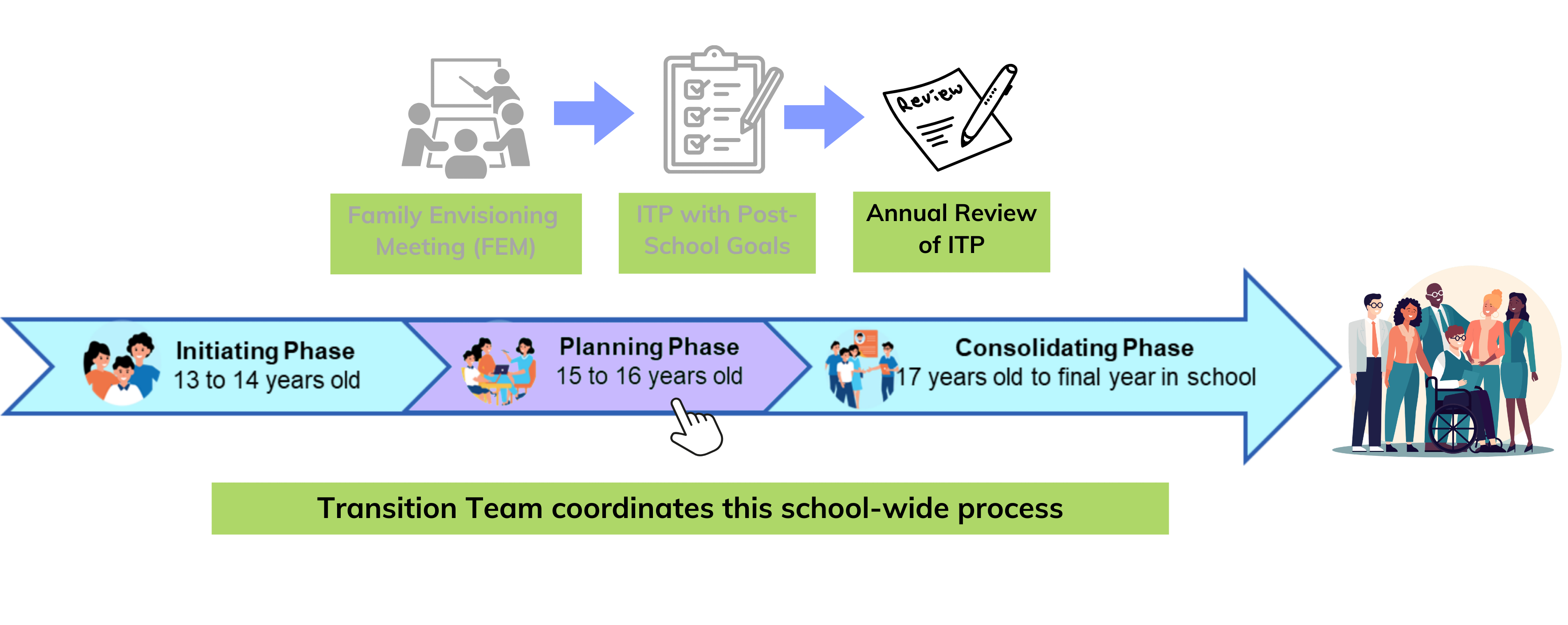
As students mature and continue to discover themselves, their aspirations and goals may change. Likewise, the supports needed to help them work towards their goals may need to be adjusted.
It is thus essential that the student’s Individual Transition Plan (ITP) is reviewed regularly until the student graduates. This review should take place annually after the first ITP is developed, beginning at age 16 through to the graduating year.
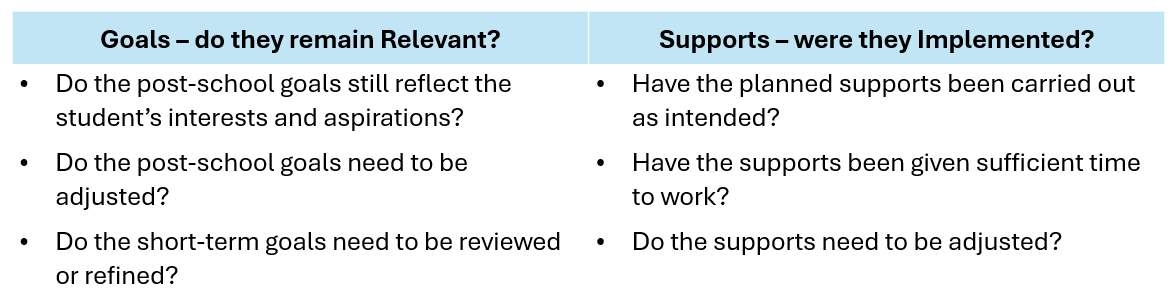
The ITP review is a person-centred and collaborative process between the student, family, and school. It focuses on 2 key elements – the student’s goals and the supports.
In reviewing the ITP, we can ask the following questions:
Overarching ITP Review Process
The Goal-Support Matrix
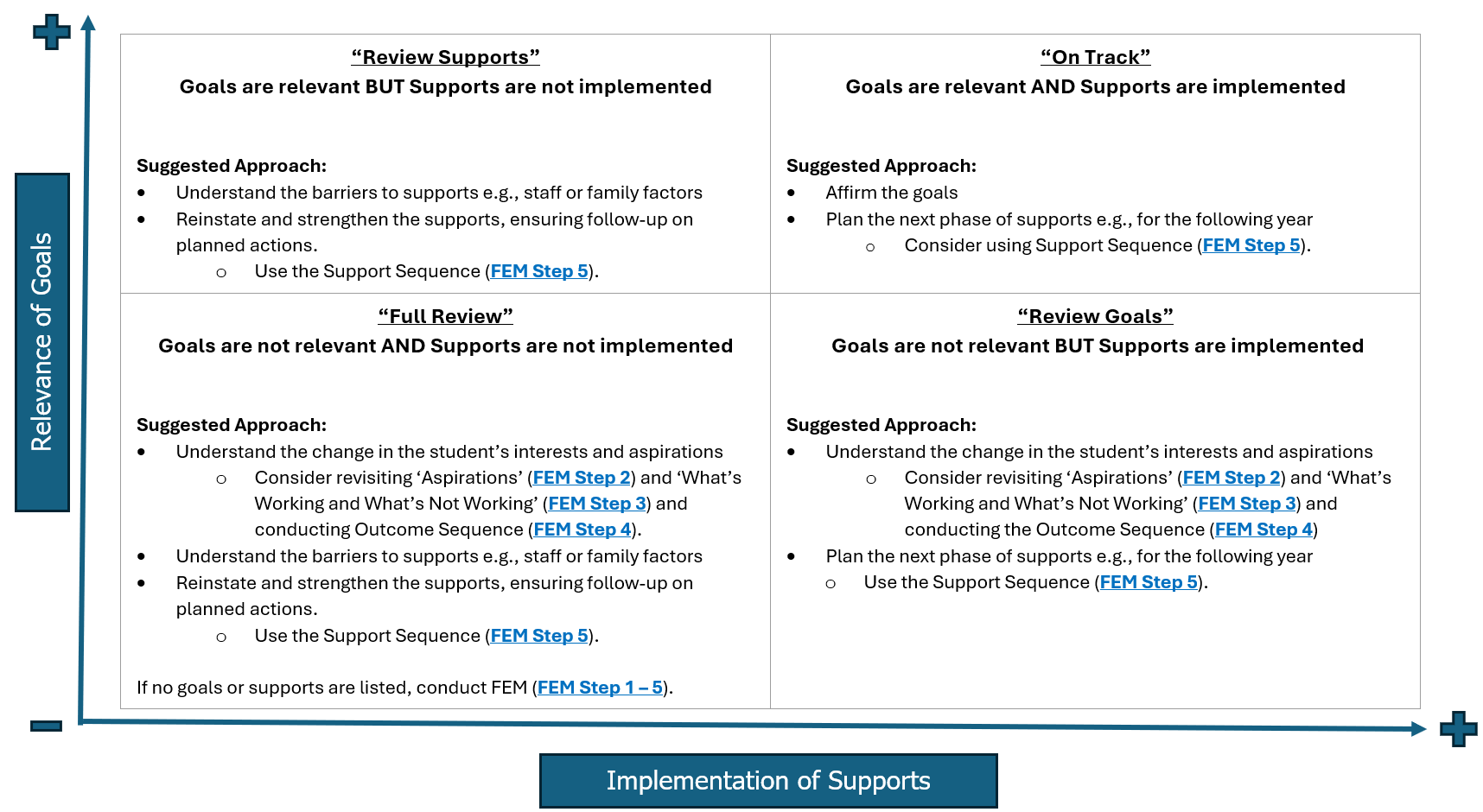
The Goal–Support Matrix guides the transition team in determining the appropriate approach and actions for the ITP Review. Four scenarios are possible based on whether the student’s goals remain relevant, and whether the supports have been implemented.
For reference, click here for the 5 steps of FEM.
Steps in the ITP Review Process
Step 1: Prepare for the ITP Review Meeting
a) Update the student’s One Page Profile (OPP) and any other PCP tools.
b) Work with the student’s teachers, job coach, and/or allied professionals to prepare to share progress data on the student’s Goals and Supports.
c) Invite the student, family members, and relevant school staff supporting the student’s goals to the meeting.
d) Ensure that a conducive meeting room and materials (e.g., copies of the student’s ITP) are prepared.
Step 2: Conduct the ITP Review Meeting
a) Welcome participants and state the purpose of the ITP review meeting.
b) With reference to the student’s ITP and the Goal-Support Matrix, ascertain the scenario together by:
Checking on the student’s goals:
Do the post-school goals still reflect the student’s interests and aspirations?
Do the post-school goals need to be adjusted?
Do the short-term goals need to be reviewed or refined?
Checking on the supports:
Have the planned supports been carried out as intended?
Have the supports been given sufficient time to work?
Do the supports need to be adjusted?
Then carry out the steps indicated in the Suggested Approach accordingly.
Step 3: After the ITP Review Meeting
a) Consolidate notes on the progress shared and decisions made regarding Goals and Supports.
b) Update the student’s ITP, particularly the ‘My Goals and Action Plan’ section.
c) Disseminate the updated ITP.
Considerations in Final Years
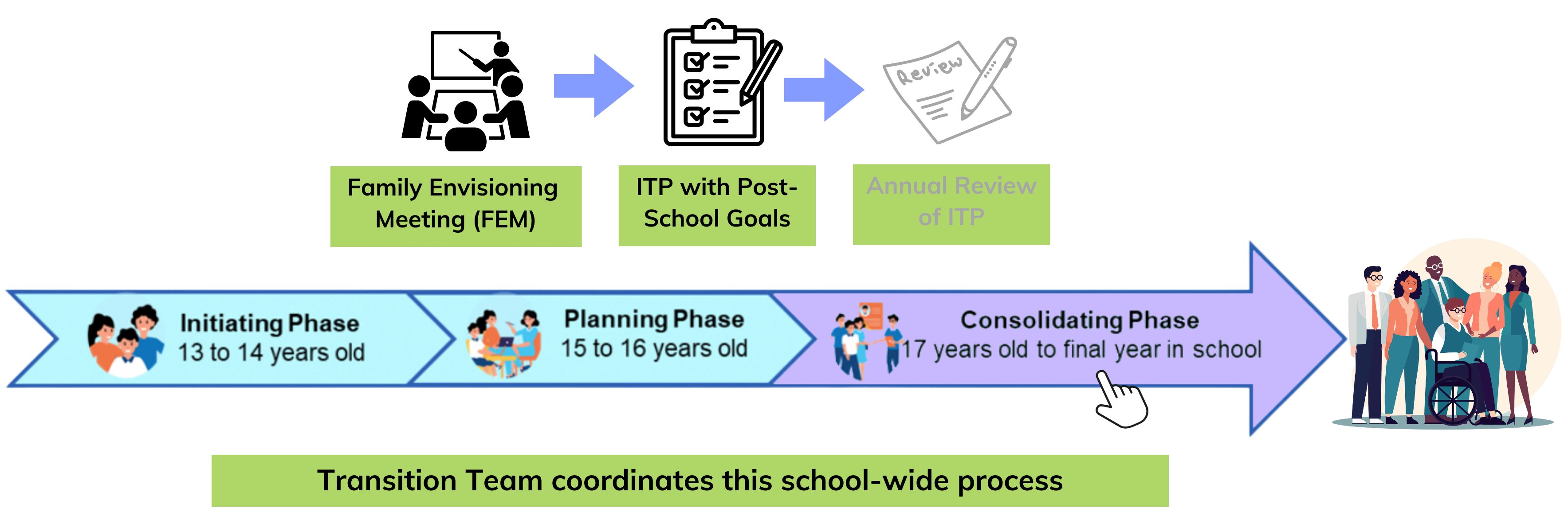
During the Consolidating Phase when the student is in their final two years of schooling, the focus of the ITP Review shifts to:
Reviewing and agreeing on the student's post-school goals;
Narrowing down and deciding on post-school services and resources to meet these goals; and
Understanding the family's readiness and support needs for post-school transition.
In the Penultimate Schooling Year (Age 17)
At 17 years old, the ITP review meeting should include identifying post-school services and resources and developing actions to prepare for possible applications and referrals in the final schooling year.
For scenarios where goals remain relevant: facilitator should focus on Support Sequence #6: Community & Services to ensure that appropriate post-school pathways are identified and services are explored.
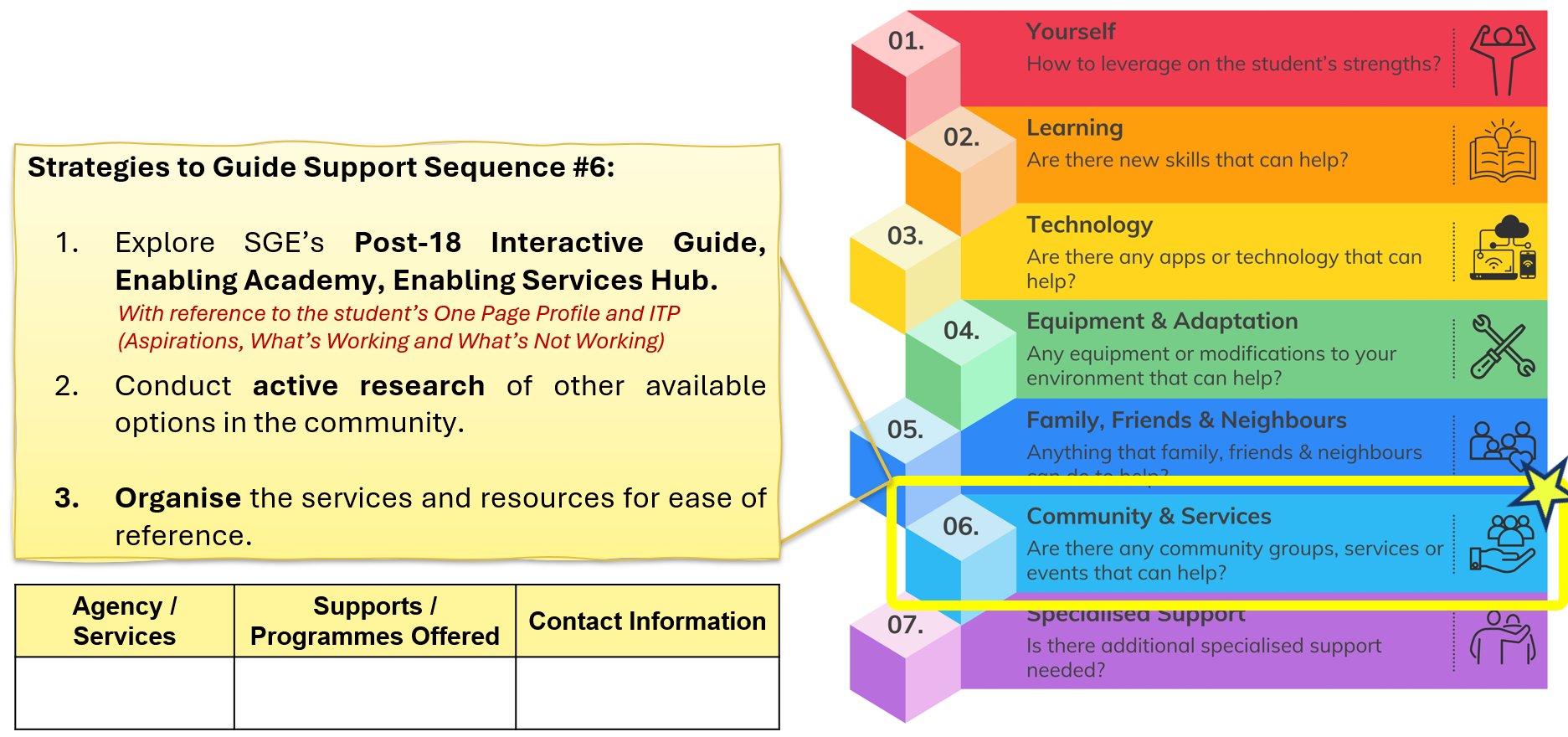
For scenarios where goals are not relevant: Re-establish the post-school goals before identifying relevant community services through Support Sequence #6: Community & Services.
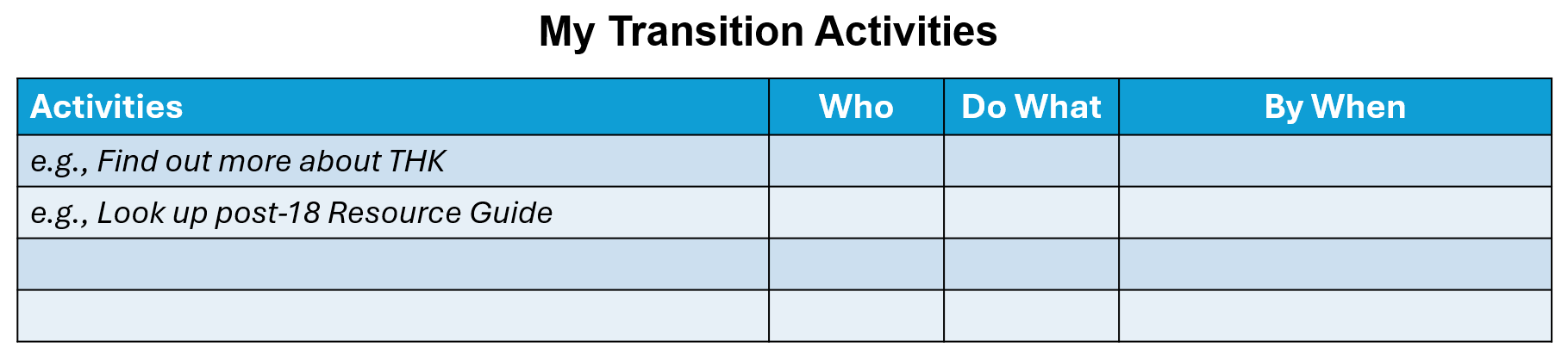
Following the review meeting, update the ITP, specifically the 'My Transition Activities' section, to reflect the community services and resources actions identified through Support Sequence #6.
In the Final Schooling Year (Age 18)
The Final ITP Review should include confirming the student’s post-school goals and identifying support needs for post-school transition. The meeting should be conducted in the student’s graduating year to provide sufficient time for applications, referrals, and preparation for handover to post-school services.
With reference to the student's post-school goals, focus on:
Support Sequence #5: Family, Friends & Neighbours to understand the family’s network of supports and readiness to navigate services, and
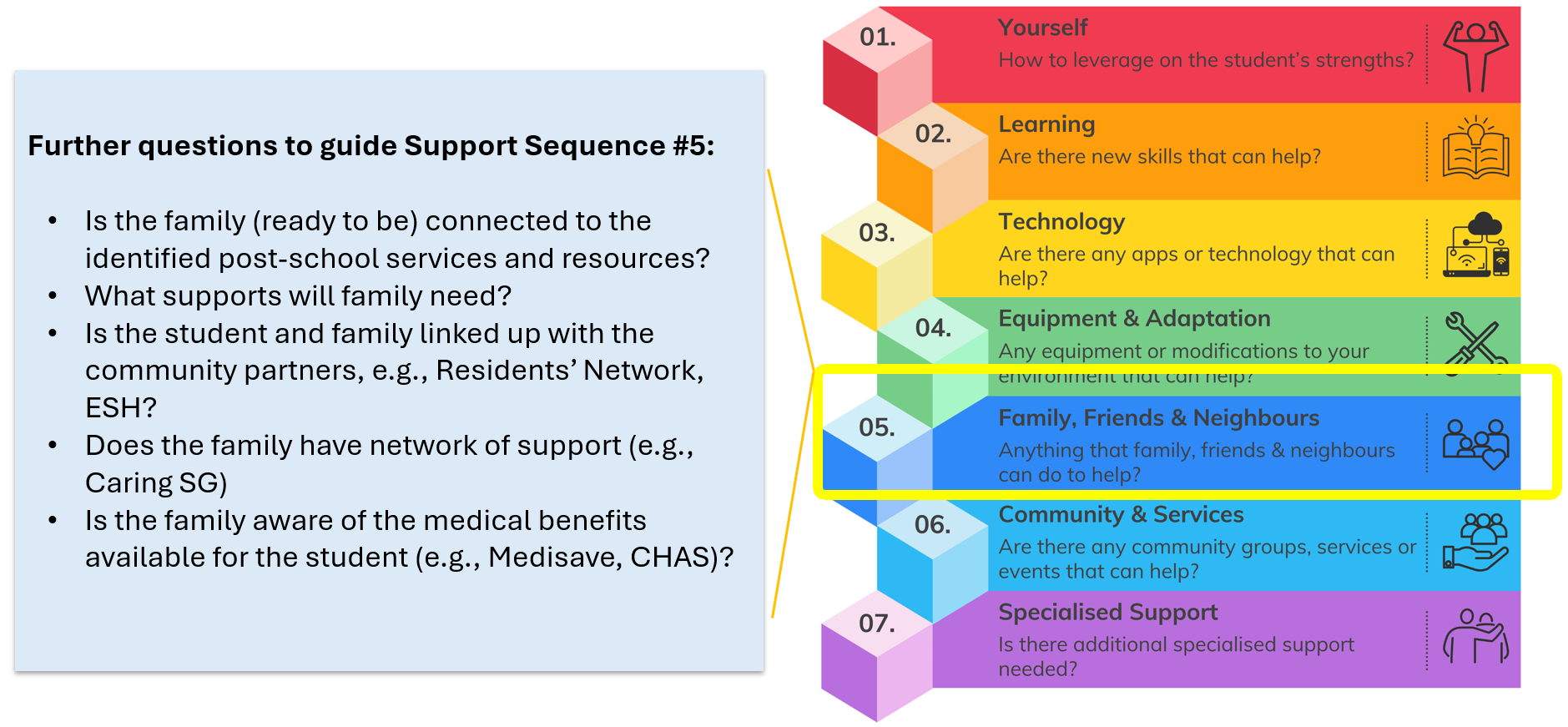
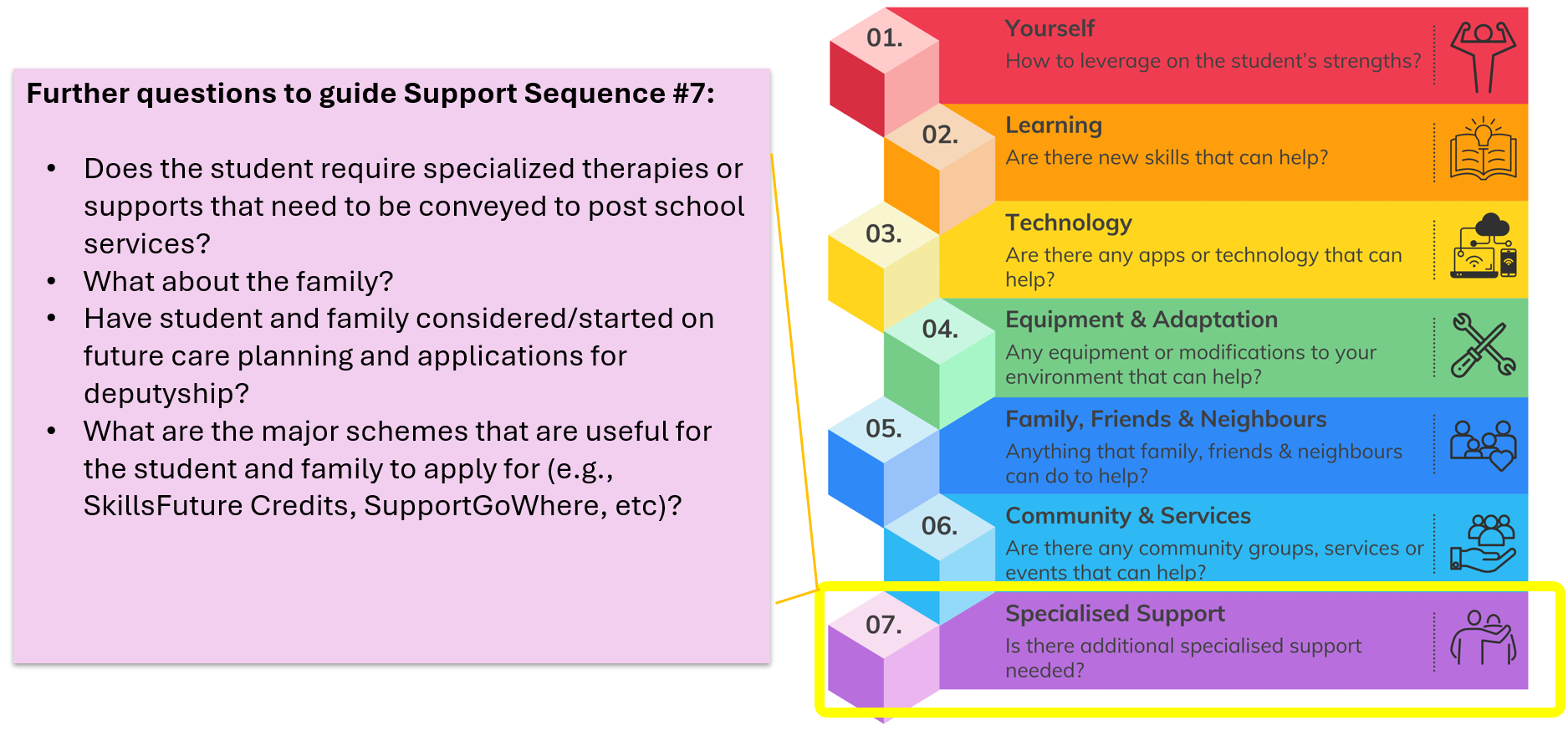
Support Sequence #7: Specialised Support to identify any specific or significant family needs that require specialised resources.
Update the student’s One-Page Profile (OPP) to ensure it accurately reflects their strengths, needs, and preferences.
Following the review meeting, update the 'Planning for My Next Pathway' section in the ITP to capture the student’s and family’s needs and goals, as well as the points of discussion made with relevant post-school agencies.
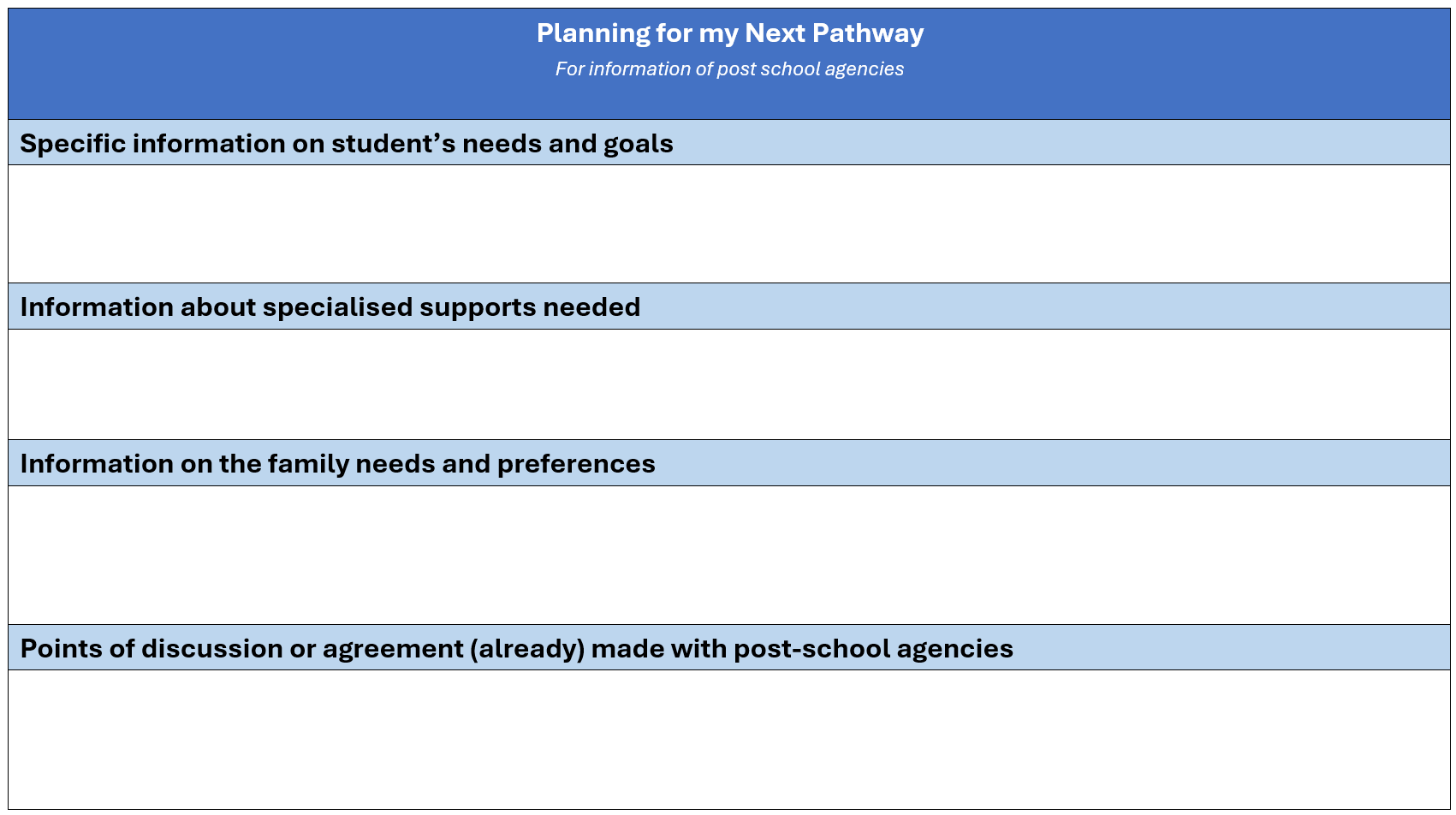
Consolidate the student’s OPP and ITP for handover to post SPED agencies.